Mr. Lincoln Comes to Pittsfield
2004
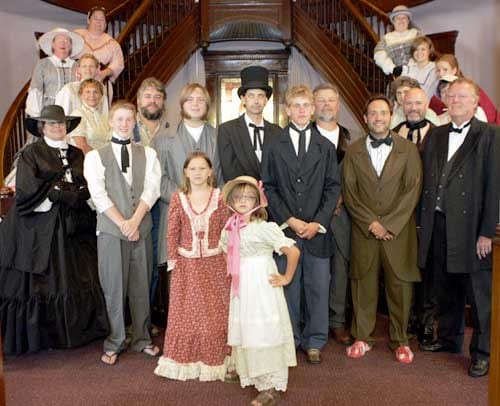
Mr. Lincoln Comes to Pittsfield is Ken Bradbury's affectionate historical play recreating a real day in the life of Pittsfield, Illinois: September 30, 1858, when Abraham Lincoln came to town during his Senate race against Stephen A. Douglas to speak from the courthouse on the future of slavery in the United States. The action unfolds in the courtroom itself as the townspeople wait — and wait — for their famously tardy candidate to finish telling stories down at the drug store and make his way across the square.
The story is narrated by Zebulon, the courthouse janitor, who sweeps, empties spittoons, and slips into knowing asides to the audience while the rest of the cast bustles about preparing for the speech. Through his commentary and the chatter of the gathering crowd we meet the people who made Lincoln's Pike County so welcoming: Colonel William Ross, the War of 1812 veteran who founded Pittsfield and named it for his Massachusetts hometown; John Greene Shastid, Lincoln's old New Salem neighbor whose family famously fed him a whole covey of broiled quail; and young John Nicolay, the printer's devil at the Pike County Free Press who would one day urge Lincoln to run for President and serve as his private secretary in the White House. Mrs. Scanland frets over a cold turkey waiting at home, the Methodist choir rehearses its warm-up songs, and the Colonel keeps an eye on the restless — and partly Democratic — crowd.
Drawn closely from local Pike County history, the play captures Lincoln as the returning favorite son: the man who twice tried cases in the county court, who lifted little Lizzie Gilmer up off her swinging gate and kissed her, and who would speak for two hours on the question of whether "all men are created equal" should remain "our old and only standard of free government." It is a warm, gently comic portrait of small-town Illinois on the eve of history.
Cast
- Zebulon — the courthouse janitor and narrator
- Marie — the choir director
- Mrs. Scanland
- Colonel William Ross — founder of Pittsfield
- John Greene Shastid — friend of Lincoln from New Salem days
- John Nicolay — printer's devil, soon to be Presidential secretary
- Abraham Lincoln
- Daniel Gilmer — a lawyer
- Lizzy Gilmer — his daughter
- The Choir
Production Notes
Written by Ken Bradbury. The play is set in the courtroom of the Pittsfield courthouse on September 30, 1858. Bradbury's staging notes call for live music sung in the courtroom before the show begins, in keeping with the period custom of opening such gatherings with "warm-up music," with broadsides of the song lyrics distributed among the crowd. The script is grounded in detailed local history — Lincoln's stay at the Ross mansion, his speech following Douglas's appearance two weeks earlier, his ambrotype sitting at Calvin Jackson's portable photo gallery, and his many Pike County friendships among them the lawyers Gilmer and Crenshaw, furniture maker Charles Lame, and Robert Scanland.
Photos