A Christmas Carol: The Jacksonville Version
2012 · Grace Methodist Church, Jacksonville, Illinois
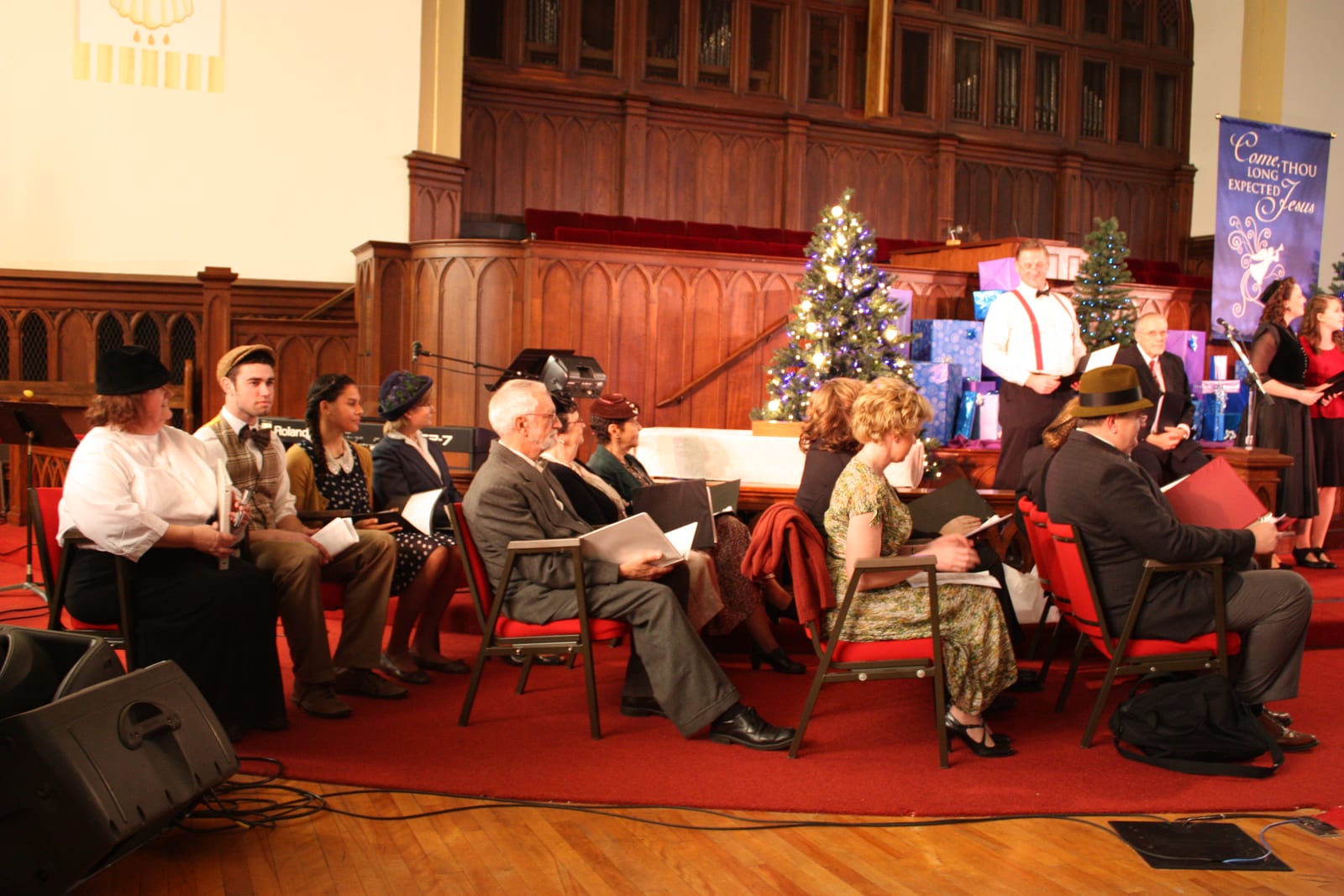
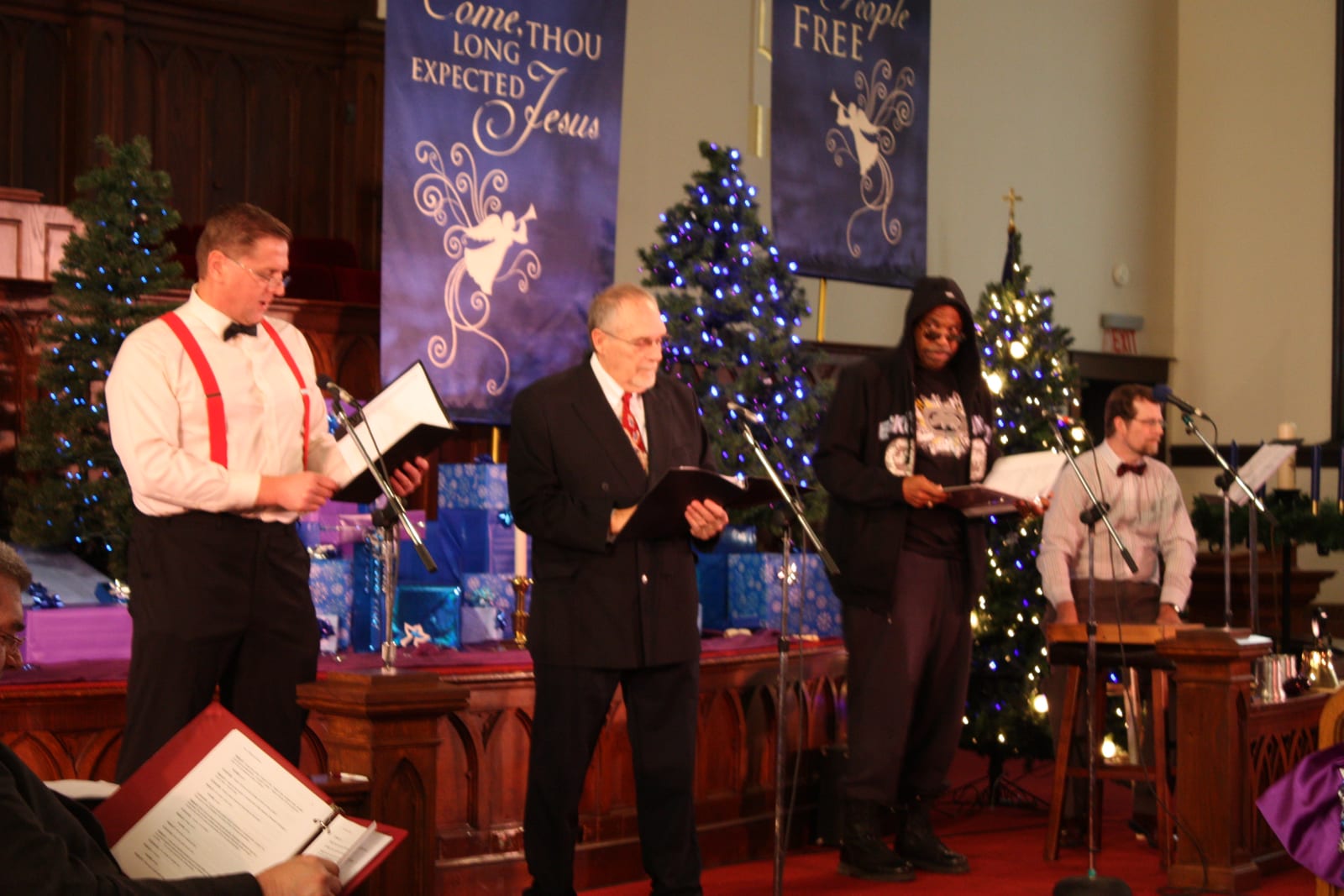
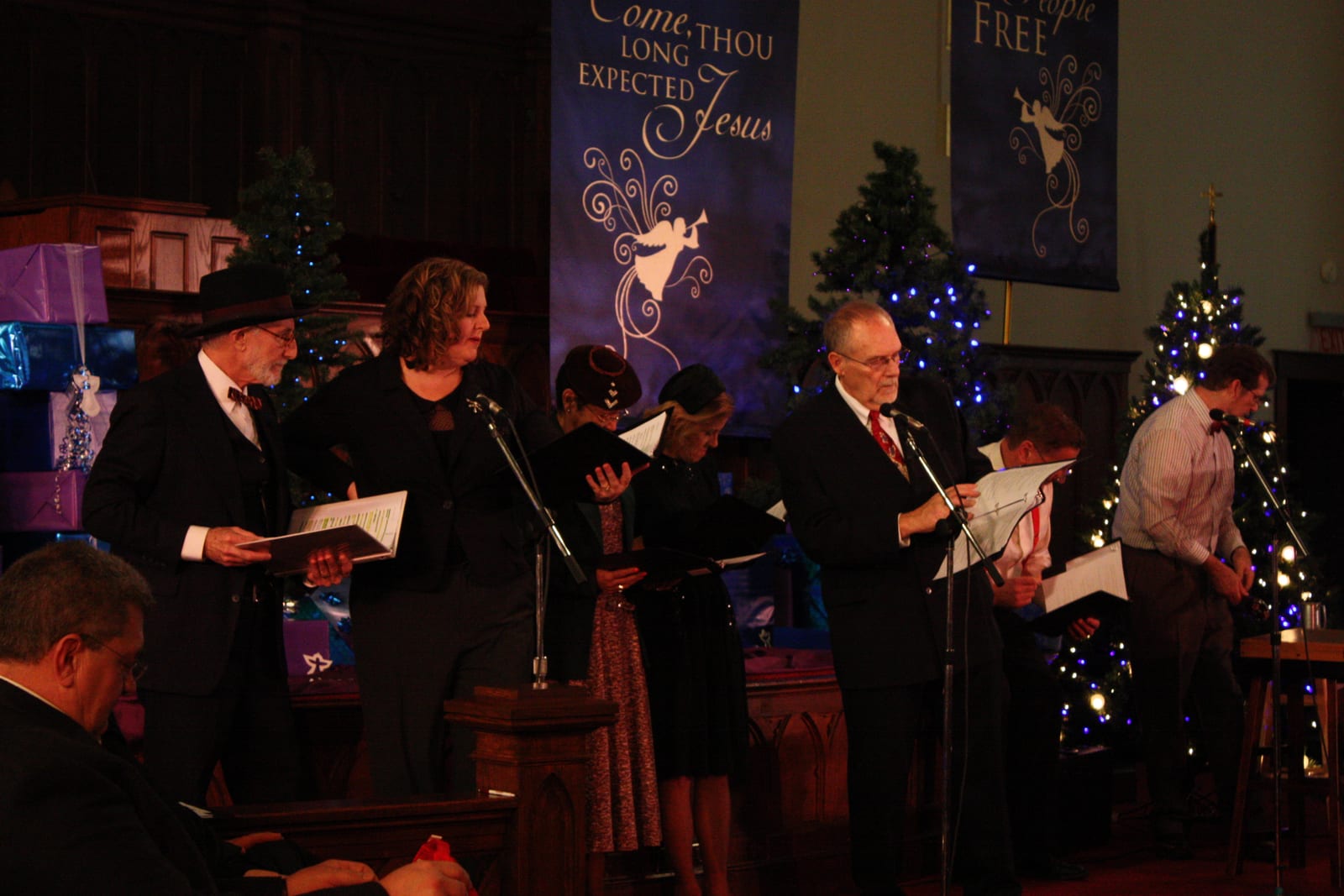
Ken Bradbury took Charles Dickens at his word -- "Marley was dead to begin with" -- and then, in his own phrase, "heavily edited" the rest, transplanting A Christmas Carol into the streets and storefronts of Jacksonville, Illinois. Staged as an old-time radio broadcast in the style of the 1940s, the show seated its cast onstage in full view of the audience, each actor easing up to the microphone as their cue approached while a busy sound-effects man knocked on doors, rang bells, and conjured the howl of ghosts. The conceit even reached the air: Ken and Gary Scott worked to broadcast the performance over WLDS/WEAI radio, so that the Saga played both onstage and across the dial.
What made the "Jacksonville Version" sing was its local soul. Dickens's London gave way to a counting house renamed "Scrooge and Marley, Savings and Loan -- not a member of FDIC," and the parade of Christmas characters rubbed elbows with Mugsy's crowd, the Emporium bar, Wal-Mart shoppers, Kiwanis rowdies, VFW shotguns, the District 117 board, and the Country Club partiers. Between scenes, the Crooning Carls Clan -- Nathan, Carrie, and Parker Carls -- delivered singing commercials for real hometown sponsors, backed by Ken's arrangements of standards like "Sentimental Journey," "Bye Bye Blackbird," "White Christmas," and "Don't Fence Me In," along with "pretty much anything Inkspots."
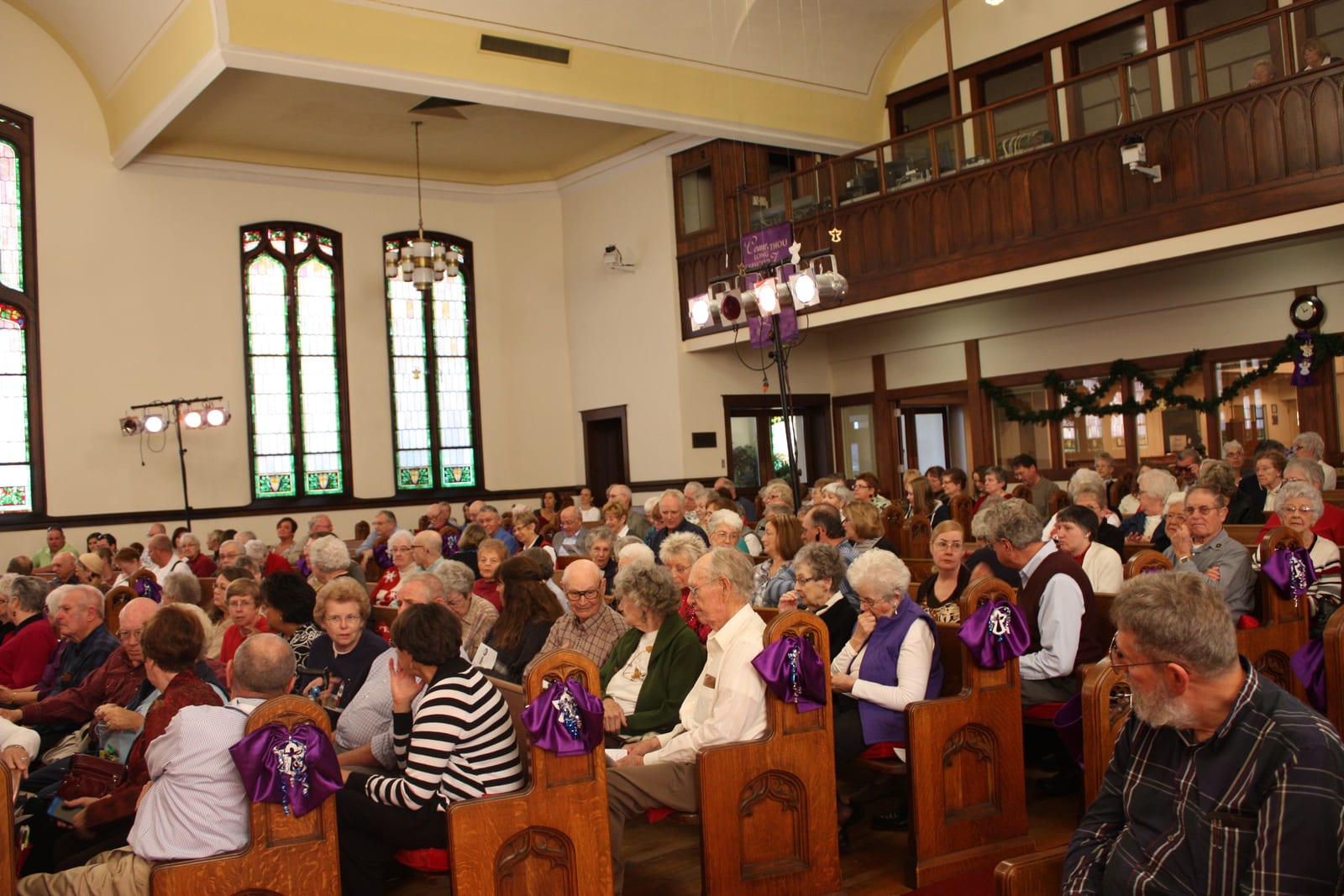
The whole audacious project was mounted as a benefit for the Lincoln Land Community College student scholarship fund, with all seats five dollars, "even if you're Methodist." Brother Keith Bradbury took the role of Scrooge, and a cast of two dozen Jacksonville neighbors filled out the Cratchits, the ghosts, and a town's worth of incidental voices -- church sounds, bar sounds, animal sounds, and everything in between.
Cast
- Narrator — Alan Stare
- Ebenezer Scrooge — Keith Bradbury
- Announcer — Gary Scott
- Jacob Marley — Bob Large
- Bob Cratchit — Bill Meier
- Mrs. Cratchit — Sylvia Burke
- Peter Cratchit — John Love
- Martha Cratchit — Erin Washington
- Tiny Tim — Mike Fender
- Fred, Scrooge's nephew — Eddie Carpenter
- Fred's Wife — Barb Gatlin
- Phone Machine Voice — Ginny Fanning
- Mugsy's Customer — Jodi Heitbrink
- Man One (solicitor) — Barb Gatlin
- Man Two (solicitor) — Bruce Surratt
- Knocker Woman — Katie Phelps
- Ghost of Christmas Past — Tony Williams
- Ghost of Christmas Present — Donna Stare
- Ghost of Christmas Future — Marc Steinberg
- Belle — Erin Washington
- Belle's Husband — Bruce Surratt
- Young Scrooge — John Love
- Ronnie Tendick — Ron Tendick
- Young Lad — Parker Carls
- Sound Effects — Karl Bockemeir
- Commercial Singers — Nathan, Carrie & Parker Carls
- Music — Ken Bradbury
Additional Jacksonville voices and roles -- including a Methodist (Jan Terry), a Catholic (MaryJane Million), and townsfolk named Bill Costello, Elmer Lukeman, Lynn, Mary, John, Nancy, Anita, and Danny -- were drawn from the same ensemble, who also provided the crowd noise, church silence, ghost groans, and "VFW shotguns" that filled out the radio soundscape.
Production Notes
- Adaptation: Charles Dickens, heavily edited by Ken Bradbury, with original music by Ken.
- Style: Staged as a 1940s-era live radio broadcast; costuming was "1940-ish," with double-breasted suits and bow ties. Actors sat onstage and stepped to the microphone for their cues.
- Rehearsals: 6 p.m. on November 29 and 30, and 1 p.m. on December 1.
- Performances: Two shows on Sunday, December 2, at 2 p.m. and 7 p.m.
- Venue: Grace Methodist Church, Jacksonville, Illinois.
- Benefit: Lincoln Land Community College student scholarship fund; tickets five dollars, all seats. Scripts were made available at the LLCC front desk on the square in Jacksonville.
- Broadcast: Ken and Gary Scott arranged to carry the performance over WLDS/WEAI radio.
- Crew: Karl Bockemeir on sound effects; Chuck West on lights and sound. A "Hootenanny" fundraiser the week prior (November 24 at Grace Methodist) featured Ken alongside Barry Cloyd, Kristin Jamison, Luke Crawford, Mike Post, and Becky McCartney.
Photos